
How to Select an Advanced Rotary Dryer Solutions Provider? Insights from BOLIDAMACHINERY Technical Experts


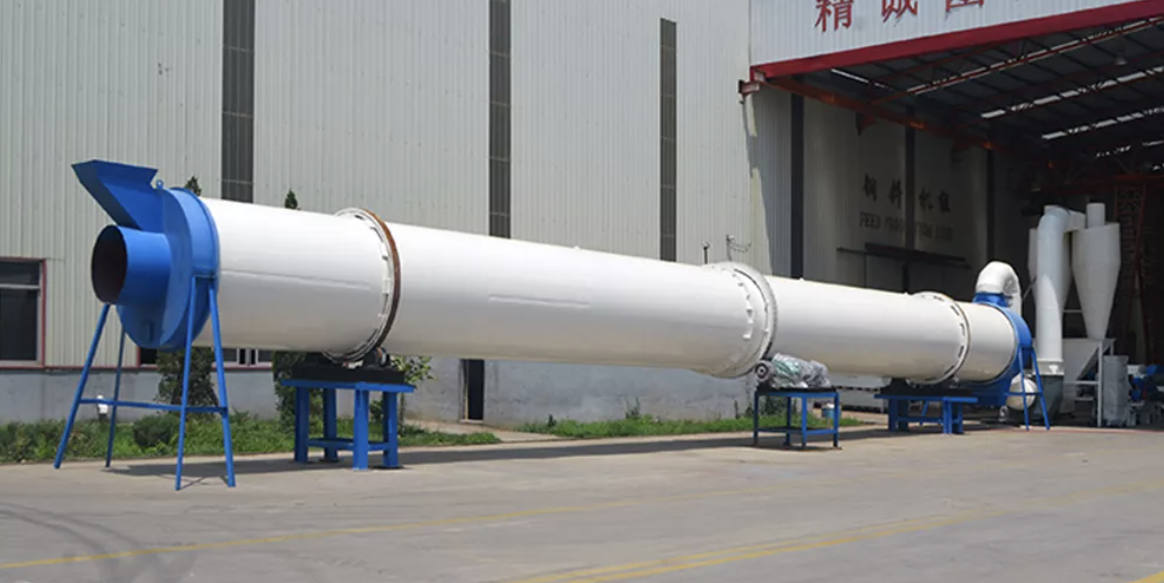
(YorkPedia Editorial):- Jinan, Shandong May 23, 2026 (Issuewire.com) – How to Select an Advanced Rotary Dryer Solutions Provider?
Industrial drying is a critical cornerstone across sectors such as biomass fuel production, environmental engineering, agricultural processing, and chemical manufacturing. As modern industries push for higher thermal efficiency, lower energy consumption, and compliance with increasingly stringent environmental regulations, the choice of equipment becomes paramount. Selecting an Advanced Rotary Dryer Solutions Provider is no longer just a procurement decision; it is a foundational strategic investment that dictates long-term processing efficiency, operating costs, and operational reliability.
Engineering experts from BOLIDAMACHINERY point out that evaluating a solutions provider requires looking beyond raw equipment costs. Instead, industrial operators must systematically assess a provider’s core scientific research capabilities, thermal engineering design innovations, manufacturing precision, and proven track records in field applications.
The Core Technical Metrics of Advanced Industrial Drying
From a mechanical and thermal design perspective, an industrial rotary dryer must optimize heat transfer mechanics while managing the fluid dynamics of raw materials. Technical experts emphasize that high-tier solutions providers differentiate themselves by how they engineer the interaction between the heat source and the material bed inside the rotating cylinder.
The efficiency of a rotary dryer is primarily governed by its volumetric heat transfer coefficient and the cross-sectional distribution of the material. Traditional single-cylinder configurations often suffer from uneven heat exposure, leading to thermal gradients where the core of a material remains wet while the surface is overheated. Advanced solutions providers mitigate this issue by designing customized, multi-angle internal lifters (lifting plates). These internal flight configurations are engineered based on the specific physical properties of the material–such as particle size distribution, moisture stickiness, and angle of repose. The lifting plates lift and shower the material continuously across the internal cross-section, forming a uniform “material curtain” that maximizes the contact surface area with the counter-current or co-current hot air stream.
Furthermore, air-tight sealing and thermal insulation represent critical engineering thresholds. Poorly designed drum setups allow cold air infiltration or excessive radiant heat loss, which severely degrades thermal efficiency. Professional manufacturers implement advanced labyrinth seals or mechanical graphite face seals at both the feeding and discharging ends of the drum, keeping heat dissipation to an absolute minimum and ensuring stable negative pressure operation.
Innovation in Multi-Chamber Heat Exchange
To resolve the footprints and high energy costs associated with traditional setups, advanced technical design has shifted toward multi-chamber architectures. A prime example of this engineering evolution is the industrial three-cylinder dryer, a highly efficient alternative that redefines the geometric constraints of industrial drying.
The three-cylinder dryer shortens the physical footprint of the drying body by nesting three separate, coaxial cylinders within one another. Rather than flowing down a single long horizontal drum, the material and hot air travel sequentially through an inner, a middle, and an outer cylinder sleeve. This configuration establishes a Z-shaped reciprocating material flow path.
This nested design yields profound technical advantages:
- Thermal Energy Recovery:The inner and middle cylinders are completely surrounded by the outer drying stages. Consequently, radiation heat loss from the innermost chambers is directly absorbed by the surrounding material layers rather than escaping into the atmosphere.
- Optimized Cross-Sectional Utilization:The coaxial placement ensures that every cubic meter of the cylinder volume is actively engaged in heat exchange, allowing the overall length of the machine to be reduced by approximately 65% to 70% compared to a single-cylinder drum of equivalent capacity.
- Built-in Structural Pre-drying:Wet materials enter the central inner cylinder where the thermal differential is at its peak, initiating a rapid pre-drying phase that eliminates surface moisture and mitigates material clumping before the material transitions to the secondary and tertiary chambers.
From an engineering perspective, the full lineup of these industrial three-cylinder configurations demonstrates a highly calibrated balance of power, speed, and evaporation performance to meet diverse production scales:
- Model YSHG1.8–10–3:Configured with a sophisticated power train totaling 2.2*4 + 37 + 3 + 2.2 kW, delivering an evaporation capacity of 0.8 to 1.4 tons of water per hour, while maintaining a precise rotational speed of 4 to 10 r/min.
- Model YSHG2.2–10–3:Features an upgraded power configuration of 3*4 + 55 + 5.5 + 3 kW, achieving an evaporation capacity of 1.2 to 1.8 tons of water per hour under a controlled speed of 4 to 10 r/min.
- Model YSHG2.5–10–3:Built for heavy industrial throughput, utilizing a high-torque configuration of 5.5*4 + 75 + 5.5 + 3 kW to yield an impressive evaporation capacity of 2.0 to 3.0 tons of water per hour, with a flexible drum rotation speed of 4 to 10 r/min.
- Model YSHG3.0–10–3:The flagship high-capacity model, engineered with an ultra-robust power architecture of 5.5*4 + 90 + 5.5 + 3 kW, pushing the thermal evaporation limits to 2.8 to 4.0 tons of water per hour under a regulated speed of 4 to 10 r/min.
Verification of Manufacturer Capacity and Global Track Records
The ultimate test of an advanced solutions provider lies in its manufacturing infrastructure and global field execution. Operational excellence requires a partner backed by significant registered capital, extensive production footprints, and a dedicated scientific research and development workforce. A strong capital foundation ensures that the manufacturer can invest in heavy-duty automated welding positioners, large-bore CNC lathes for processing roller rings, and rigorous quality inspection protocols.
Technical reliability must also be verified through international market credentials. Equipment that complies with strict global standards carries verified technical identification from relevant national and international regulatory departments. Further, a provider’s presence in highly regulated markets across Europe, North America, South America, Southeast Asia, and Africa serves as a concrete indicator of structural durability and mechanical safety.
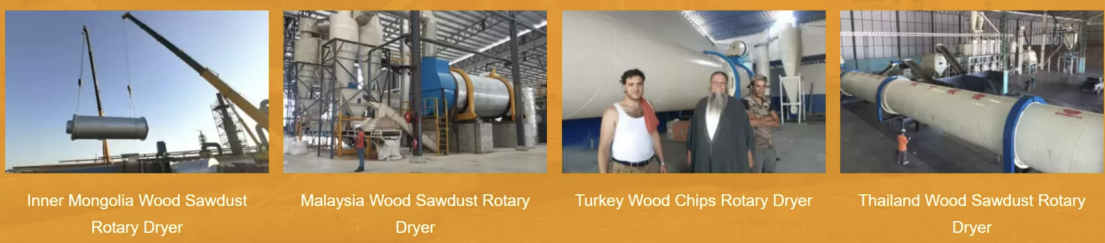
Real-world project deployments across diverse geographical zones–ranging from large-scale sawdust and wood chips drying lines in Malaysia and Thailand to heavy-duty wood shaving processing systems in Turkey and domestic industrial centers–demonstrate a provider’s ability to calibrate systems for varying ambient temperatures, humidity levels, and diverse raw materials like straw, forage, leaves, and organic fertilizers.
Selecting the right partner means choosing an enterprise that blends scientific research development, manufacturing sales, and comprehensive international trade services. When a provider possesses a robust technical service network capable of delivering 24/7 technical consultation, custom raw material testing, and proactive after-sales engineering support, industrial operators can confidently secure a drying solution that minimizes lifecycle costs and maximizes long-term production yields.
For more information on industrial drying technologies and comprehensive biomass processing systems, please visit the official website: https://www.biopelletmachinery.com/
This article was originally published by IssueWire. Read the original article here.
